It is 6:30 in the morning, the school bus comes in forty minutes, and your child woke up with a warm forehead and a cough that was not there last night. You have to decide fast: send them, keep them home, or get them checked? Every fall this scene plays out in homes all over Pasadena, because classrooms pack dozens of kids into closed spaces right as flu, COVID-19, RSV and common colds start going around. This guide, prepared by the clinic's medical team, breaks that decision into concrete steps.
Three questions before your child walks out the door
Before you pack the backpack, take a moment with these three questions:
- Is there a fever? Use a thermometer, not your hand. A reading of 100.4 °F (38 °C) or higher counts as fever, and a child with a fever stays home.
- Can they get through a school day? A child who will not eat breakfast, falls back asleep or cries because everything hurts is not going to learn anything and will pass the bug to the whole class.
- Did they get fever medicine this morning? If the temperature dropped only because of acetaminophen or ibuprofen, the fever is still there, just masked. Sending a child to school like that is the number one reason the school nurse calls by mid-morning.
If all three answers are reassuring (no fever, normal energy, no medicine involved), a runny nose with clear mucus or a mild cough usually is not a reason to miss school.
Quick chart: school or home?
| What you notice in the morning | School today? |
|---|---|
| Fever of 100.4 °F or higher | No. Keep them home |
| Fever brought down with medicine that morning | No, it still counts as a fever |
| Clear runny nose and mild cough, no fever, good mood | Yes, with tissues and a reminder to cough into the elbow |
| Bad sore throat with fever and no cough | No. Strep should be ruled out |
| Vomiting or diarrhea overnight | No, not until they eat and drink normally |
| Cough that keeps them up at night or wheezing | No, and they need to be seen |
| Positive flu or COVID-19 test | No, not until they meet the return criteria |
Every district sets its own rules. If your child attends Pasadena ISD, Deer Park ISD or Galena Park ISD, check the student handbook or ask the school nurse; some campuses require a doctor's note after a certain number of absences.
When can they go back to class?
The general CDC guidance for respiratory viruses has two parts, and both have to be true:
- A full day with no fever and no fever-reducing medicine. That means no acetaminophen or ibuprofen during that time, and a normal temperature.
- Symptoms getting better overall. Less coughing, more energy, appetite coming back.
For the next few days after returning, a mask and handwashing before lunch help keep the virus from spreading to classmates.
Two situations trip up a lot of parents:
- Strep throat: your child can go back after at least 12 hours on antibiotics and once the fever is gone, but they must finish the full course even if they feel fine by day two.
- The cough that lingers: after a flu or cold, a cough can hang on for two or three weeks. If there is no fever, your child is eating well and the cough is fading, school is fine; there is no need to wait until it is completely gone.
If the school asks for an excuse, the respiratory illness visit includes a school note with the date your child may return.
When to bring them in to the clinic
Not every cold needs a visit, but these signs are worth having the medical team take a look:
- Fever lasting more than two or three days, or fever that comes back after it was gone.
- Severe sore throat, swollen neck glands or white spots on the tonsils.
- Ear pain, especially if your child tugs at the ear or will not let you touch it.
- A cough that gets worse instead of better after a week.
- A classmate or sibling with confirmed flu or strep.
- Kids with asthma, diabetes or another chronic condition, since flu complicates more easily for them.
Coming in early has a practical upside: flu antivirals work best when started in the first two days of symptoms, and the rapid test is run right at the clinic with results in minutes.
When to go to the ER or call 911
These signs cannot wait for a clinic visit:
- Trouble breathing, very fast breathing, or skin pulling in between the ribs with each breath.
- Bluish or gray lips or nails.
- Extreme drowsiness, confusion, or a child who is not responding like usual.
- Signs of dehydration: no urine for many hours, crying without tears, a very dry mouth.
- Chest pain, a stiff neck or a seizure.
- Any baby under three months old with a fever.
What happens at the visit
- Tell the front desk your child has a fever or cough so they can hand you a mask.
- Staff check temperature, oxygen and vital signs.
- Depending on symptoms, your child gets a rapid flu test, a COVID-19 test or a strep test, with results in a few minutes.
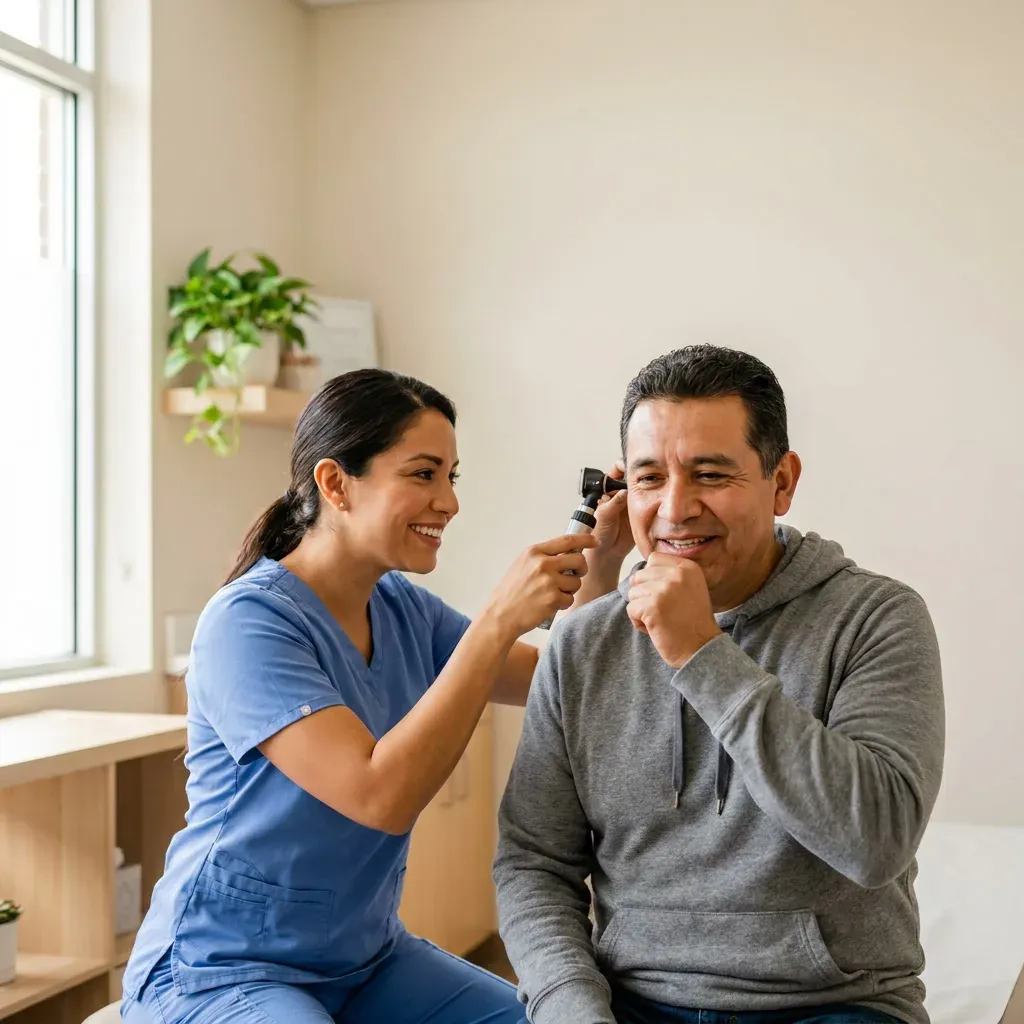
- Throat, ears and lungs are examined.
- You leave with a diagnosis, home-care instructions and, if you need it, the school note.
Antibiotics are prescribed only when the cause is bacterial, such as confirmed strep. They do nothing for most flu and colds, and giving them when they are not needed does not make the illness shorter.
Caring for them at home without common mistakes
- Dose by weight, not by age. Use the syringe or dosing cup that comes with the medicine, never a kitchen spoon.
- No aspirin for children or teens with flu or chickenpox: it is linked to a rare but serious complication.
- Do not use leftover antibiotics from a sibling or a past illness.
- Small sips, often: water, broth, oral rehydration solution, or ice pops if the throat hurts.
- No screens at bedtime so they sleep longer; sleep is part of getting better.
Keeping the virus from making the rounds at home
When one child gets sick, siblings and grandparents are often next in line. Use separate cups and towels, air out the bedroom, have everyone wash hands before meals, and wipe down door handles and remote controls. If someone at home is over 65, pregnant or living with a chronic illness, try to keep them out of the sick child's room.
The flu vaccine is given every season starting at six months of age and is one of the best ways to break these chains of infection in families with school-age kids. And if your child is still missing this year's checkup, a well visit is a good time for the school physical.
We are close to your child's school
Clínica Hispana Corazón y Vida sees walk-in patients in Spanish every day from 9 AM to 9 PM on W Southmore Ave, in Pasadena's 77502 ZIP code, a few minutes from South Houston, Deer Park and Red Bluff. If your child woke up with a fever and cough and you are not sure whether it will pass at home, stop by for our cold, cough and respiratory illness care. Your child's visit is paid directly, no insurance needed; if you want to know the cost before leaving home, send us a WhatsApp message.
Need medical attention?
We're here to help. Call now to schedule your appointment or visit our clinic without an appointment.
Call now: +1 (832) 930-5551